
Thus, the name "Spirit" is common to the three persons, but if you add "Holy" then it is proper to the third person.
Girolamo Zanchi
Five Books on the Nature of God,
or
On the Divine Attributes
or
On the Divine Attributes
By Girolamo Zanchi
Translated by Patrick J. O'Banion
Book 1, Chapter 4, Part 2
Volume 1 is available for order now from Merchant Royal Press
(6.) Likewise, of all the divine names (that is, both those that signify the subject and those that are predicated about the subject), certain ones are common to the whole Trinity and others are proper to individual persons.
The names whereby individual persons are denoted pertain to the second sort. For example, the name Father—not simply, but the Father of Christ—is suitable only for the first person. For, stated simply, the name Father is also predicated of Christ, insofar as He is understood as the Creator of all things and Father of us all (Isa. 9:6). And indeed, it is also understood of the Holy Spirit, such as when the apostle says: One God and Father of all (Eph. 4:6), for as the name God there is common to the three persons, so also is the name Father of all. Thus, the name Spirit is common to the three persons, but if you add Holy then it is proper to the third person.
The names that indicate personal properties [singulorum proprietates] also pertain to this second sort of names.[1] For example, unbegotten[2] is a name proper to the Father because it signifies the Father’s [personal] property. Begotten and only begotten[3] signify the Son and poured out[4] is [personally] proper to the Holy Spirit. Setting aside now the things that are [personally] proper to each of the persons, I add a seventh distinction and return to that which is common.
(7.) Four types of names are common to the whole Trinity.
The first are those whereby the essence is signified, as by the names Jehovah or God.
The second type are those that indicate the persons in general, such as the name Elohim in the Old Testament or hypostasis[5] in the New.
The third type are those that express the essential properties of God, such as the names omnipotent, righteous, or good.
The fourth type are those names predicated of God with relation to creatures. For they indicate God’s works, either those pertaining to creation and the governance of the world or those that concern the spiritual well-being of the church. Examples include the names Creator, Lord of lords, and King of kings as well as the names Redeemer, Savior, and Sanctifier. For although sometimes the name Creator is given in a preeminent way[6] personally to the Father, Redeemer to the Son, and Sanctifier and Regenerator to the Holy Spirit, they are nevertheless actually common to all the persons. For just as all the ad extra works of God are done as much by the Son and the Holy Spirit as by the Father, so also the names which indicate these works belong to each one of the persons.[7]
(8.) Of all the divine names which are predicated of God or of the individual persons, some are spoken apophatically[8] (that is, negatively) and others cataphatically[9] (that is, affirmatively).
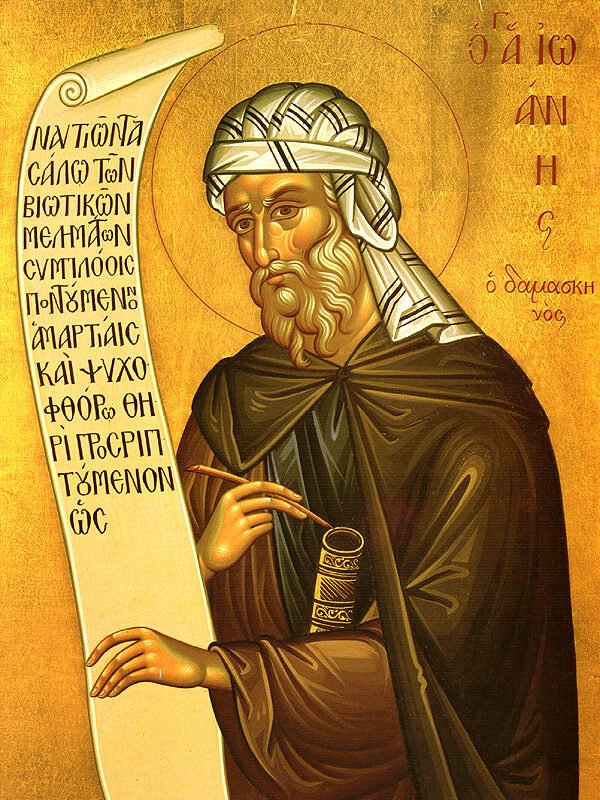
Examples of negative predication include invisible, immortal,[10] and any others we run across (1 Cor. 12 [that is, 1 Tim. 1:17]). And the fathers taught [9] that the way of negation was the best and most perfect rule for knowing God, such that whatever is said of created things—no matter how perfect and good they are—is to be denied with reference to God. Not that any perfections are lacking in God, but they are in Him in an even more excellent and perfect way. Thus, the Damascene rightly says:
Of the divine names some are uttered apophatically to indicate the superessential, such as without substance, timeless, without beginning, and invisible, not because God is inferior to anything or lacks anything (for all things are His and came into being through Him and maintain their being in Him) but because He supremely transcends all beings (for He is not one among other beings but transcends all beings) ([On the Orthodox Faith,] bk. 1, ch. 12b).[11]
Examples of things spoken affirmatively of God are unnecessary. Here, we only need to note the reason why whatever is said about creatures—that is, whatever signifies some perfection—can also be affirmatively said or predicated about God. The reason being: in order to signify that He Himself is the Author of all those perfections. I will add here the words of the Damascene:
Those that are uttered cataphatically are predicated of Him as the causative of all things. For as causative of every essence and of all beings He is called both essence and being, and as causative of all rationality and wisdom in that which is rational and wise He is called reason and rational, wisdom and wise [On the Orthodox Faith, bk. 1, ch. 12b].[12]
And so on with regard to the rest.
[1] Per Francis Turretin, a personal property “denotes the peculiar mode of subsisting and diacritical (diakritikon) character by which this or that person is constituted in his personal being and is distinguished from the others.” Institutes of Elenctic Theology, ed. James T. Dennison Jr., trans. George Musgrave Giger (P&R Publishing, 1997), 1:257.
[2] ἀγένητος.
[3] Γεννητὸς & μονογενὴς.
[4] ἐκπορευτὸς.
[5] ὑποστάσεως. Although he offers no citation, Zanchi is likely reflecting on Heb. 1:3, which he interprets in this sense elsewhere. See Girolamo Zanchi, Commentary on the Apostle Paul’s Epistle to the Philippians, trans. Patrick J. O’Banion (Merchant Royal Press, 2024), 269.
[6] κατ᾽ ἐξοχὴν.
[7] Zanchi observes a classic rule of Trinitarian theology often termed “inseparable operations” and summarized by the phrase: Omnia opera Trinitatis ad extra indivisa sunt (“All of the external works of the Trinity are inseparable”). For the historical background to this claim, see Jacob S. Trotter, “‘This Old Rule Should Be Remembered’: Three Historical Arguments for Inseparable Operations,” Journal of Classical Theology 2 (2023): 69–90.
[8] ἀποφατικῶς.
[9] καταφατικῶς.
[10] ἀόρατος, ἄφθαρτος.
[11] Τῶν θείων ὀνομάτων τὰ μὲν ἀποφατικῶς λέγεται δηλοῦντα τὸ ὑπερύσιον· οἷον ἀνούσιος, ἄχρονος, ἄναρχος, ἀόρατος, οὐχ ὅτι τινὸς ἥττων ἐστὶν, ἢ τινὸς ἐστέρηται (αυτοῦ γὰρ ἐστὶ πάντα, καὶ ἐξ ἀυτοῦ, καὶ δι᾽ αυτοῦ γέγονε· καὶ ἐν αὐτῷ σύνεστηκεν·) ἀλλʼ ὅτι πάντων ὑπεροχικῶς τῶν ὄντῶν ἐξῇρηται· οὐδὲν γὰρ τῶν ὄντων, ἀλλʼ ὑπὲρ τάντα ἐστὶ. Quoted from John of Damascus, On the Orthodox Faith, 88 (altered).
[12] τὰ δὲ καταφαηκῶς λεγόμενα, ὡς αἰτίον τῶν πάντων, κατηγορεῖται· ὡς γὰρ αἴτιος πάντων τῶν ὄντων, καὶ πάσης οὐσίας· καὶ ὧν λεγεται καὶ οὐσία· καὶ ὡς αἴτιος λόγου παντὸς καὶ σοφίας, λογικοῦ τε καὶ σοφοῦ λέγεται λόγος, καὶ λογικὸς σοφία καὶ σοφὸς. Quoted from John of Damascus, On the Orthodox Faith, 88 (altered).