
III. Furthermore, this also must be observed about the name Lord insofar as it is attributed to Christ: It is attributed to Him in the Scriptures not in a single sense but in multiple senses. Sometimes [He is so called] where the name Lord signifies the name Jehovah, according to the translators of the Septuagint, who (as previously stated) always removed the name Jehovah and wrote the name κυρίου [Lord]. There is no doubt but that the apostle understood Lord in this first sense when he said: On account of which I besought the Lord (κυρίον, that is, Jehovah) three times, and the Lord responded, “Paul, My grace is sufficient for you, for My strength (ἡ δύναμις μοῦ) is perfected in weakness” (2 Cor. 12:8[–9]). And then Paul calls this power of his Lord[1] (namely, Jehovah), which he had besought, Christ’s strength. Accordingly, the name Lord[2] refers to and invokes Christ to the extent that it signifies Jehovah.
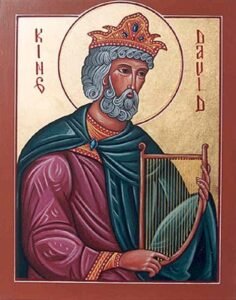 Sometimes, [Christ is called Lord] even before He became man insofar as the Father had already constituted Him to be Savior, Redeemer, King, and Lord of the whole church. In this sense, David said: Jehovah (the Father) said to my Lord (the Son), “Sit at My right hand” (Ps. 110:1). For David did not say this about Christ insofar as he anticipated Him being a man from David’s seed. Just so, Christ Himself interprets that statement in Matthew 22:32 [that is, v. 42] and v. 45, demonstrating from it that He is not only the Son of David but also of Jehovah and that He thus consists of a dual nature: divine and human. Rather, it is said with regard to Christ insofar as the Son of God became the Lord of all on account of His office.
Therefore, Christ is called Lord both insofar as, before the creation of the world, He was designated, appointed, and constituted as King and Mediator and Savior of the church and insofar as we were given to Him as an inheritance and a people. Thus, even before He redeemed us with His blood, He was called our God.
Finally, He is called Lord and we are called His servants insofar as, having become man  and dying for us, He redeemed us from the hand of the devil with the price[3] of His blood and acquired us for Himself. And thus, He incorporated us into His family, rules us by His Spirit, and reigns in us. This sense is made use of very frequently in the Scriptures. And furthermore, because the office of Savior could not be performed by anyone but God (as the Scriptures teach in profusion, especially the apostle all throughout his letters to the Romans, Colossians, and Hebrews), for that reason, whenever we see the name Lord predicated of Christ in the Scriptures, we ought to draw the necessary conclusion from it, that He is the true God. For no one is able to fulfill the role of Mediator between God the Father and men except He who is of the very same nature as both God the Father and men.
That is what I had to say about the handful of divine names that signify who the true God is: the names Elohim, Jehovah (to which is joined the name Yah), Ehyeh,[4] Shaddai,[5] θεοῦ, and κυρίου (or Lord).