
We saw the etymology for the name θεοῦ not very long ago from the Damascene.[1] In fact, he offers three etymological possibilities: It may be from to run,[2] because God runs to and embraces and welcomes and rules all in Himself. Or it may be from to burn or kindle,[3] because, whether through  mediate or immediate causes, God enflames whatever has heat or life or light. This is why He is also called fire in the Scriptures. Or (finally) it may be from to see all things.[4] All of these etymologies make known God’s supreme providence and, thus, the name θεὀς is altogether suitable for Him who created and rules over everything—none other than Jehovah Elohim.
I add this to the preceding points: The etymology drawn from the effects of fire—to burn[5]—suits God very beautifully, for it is obvious that He is frequently called fire in the Scriptures (esh[6] in Hebrew), albeit not always for the same reason. For sometimes He is called fire on account of His power to destroy the wicked and His indignation against sins. Along with many other passages, Deuteronomy 4 exhorts the keeping the Lord’s commands and, in verse 24, a reason is given. It says: Because the one God is a consuming fire, a jealous God.[7] That is how it reads in the Hebrew.
Now, on many occasions, He is called fire on account of His exceedingly bright majesty. Indeed, God is light (1 John 1[:5]), and He is said to dwell in unapproachable light [1 Tim. 6:16]. For that reason, God often appeared in a flame of fire, as in the burning bush revealed to Moses in Exodus 3. And He led the people through the desert in a column of fire. And in the vision shown to Ezekiel, He revealed Himself in the form of a fire (Ezek. 1[:27]). And so, God is generally called fire for this reason.
The Holy Spirit in particular is known by the name fire. He  (Christ) will baptize you with the Holy Spirit and fire [Luke 3:16; Matt. 3:11]. And Acts 1 mentions the same event and calls God the Holy Spirit fire, [8] and in Acts 2 He appears in fiery tongues. These and a nearly infinite number of other passages teach that it is not baseless to derive the name θεοῦ [God] from αἴθειν [to burn]. And God really is fire, not as though He were elementary fire or the fire of the stars and heavens but in the manner of indescribable splendor. And this is His divine majesty.
Some derive the Latin name Deus from the Hebrew dai[9] (whence Shaddai[10]), but this is too strained, as if the Latins were really taking this Hebrew root into consideration when they called the eternal divinity Deus. But the etymology of others is more likely, namely that it derives from the Greek δέος, which is fear. For it is characteristic of God to be feared by all, not so much with a servile fear on account of His power as with a filial fear (as they call it) on account of His fatherly kindness and goodness. From this we learn that, since He is named God, we should be reminded of our duty, namely, that we should fear, worship, and honor Him.
Nevertheless, the prevailing opinion is that it is derived from the Greek word θεὸς, made by an aspirate mutation of the weak θ into δ. In summary, if Deus is from the Greek θεὸς, then this name reminds us of who God is and what He is like: He is the One who rules over and attends to everything, for that is its etymology. But if it is from δέος, then we learn what our duty is: to fear Him.
As far as the meaning goes, this name was established to indicate 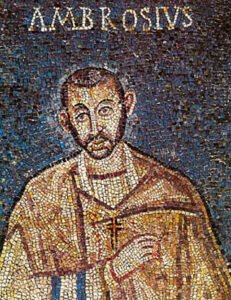 the eternal essence of God Himself—Father, Son, and Holy Spirit—when it is considered simply and absolutely. No one denies this. And so, Ambrose rightly said that this name is a name of nature,[11] that is, one that is established to signify the divine nature or essence. And so, considered simply and absolutely, this name cannot be appropriate for any creature.
Therefore, since we find throughout the Scriptures that Christ is simply and absolutely called God, true God, God above all, God forever blessed, who but Antichrist would dare to deny that Christ is the true and eternal Jehovah? I intend the same thing to be said of the Holy Spirit. It remains for us briefly to speak about the name Κυρίου, or Lord.