
Often in the Holy Scriptures, especially in Genesis, God called Himself אל שדי [El Shaddai], particularly when He was speaking to the patriarchs. To Abraham, He  said: I am El Shaddai[1] (Gen. 17:1). Thus, He said to Jacob: I am El Shaddai;[2] increase and multiply (Gen. 35:11). Hence it was the case that those patriarchs, when they named God, very frequently used this name, which is clear in that same book. Isaac said to Jacob: May El Shaddai[3] bless you and cause you to increase (Gen. 28:3). And Jacob said to Joseph: El Shaddai[4] appeared to me at Luz (Gen. 48:3).
Some derive this name from shaddad,[5] which means to lay waste, so that the name indicates God’s terrifying power. Such power is manifest in Isaiah 13:6, where he says that the desolation that is threatened on account of wickedness will come משדי, from Shaddai, which they translate as Almighty. And thus, when Job 5:4 [that is, vv. 17–18] speaks of the correction with which God chastens His own, the Greeks translate this name as the Almighty.[6] He says: Do not despise the correction of the Almighty[7]—the Hebrew is Shaddai[8]—because He afflicts with pain, and He comforts; He strikes, and His hands heal. In this instance, the name Shaddai[9] is rightly translated Almighty when Job speaks of His power whereby He can both destroy and save.
However, the more widely received opinion is that this name is composed of shin,[10] (which letter is used in place of asher[11]) and dai[12] (which indicates sufficiency) so that nothing else is Shaddai[13] except the one whom the Greeks call αὐτάρκης, that is, He who is so abundantly supplied with all blessings that He is content with Himself and sufficient for Himself so that He who actually has this Shaddai[14] cannot be in want of anything else. And surely this is how it is understood when God said to Abraham and to Jacob (and frequently to others as well) I am El Shaddai,[15] for He indicated His power to do good, to protect, and to make them blessed. And He also spoke of this omnipotence in Exodus 6:3 when He said to Moses that He was known to the fathers by the name El Shaddai[16] but not yet by the name Jehovah, as has already been explained. Accordingly, whether you consider the power to destroy or to save, the name Shaddai[17] is correctly translated as the name the Almighty. And since this name only suits God, it can also only truly and properly be predicated of Him.
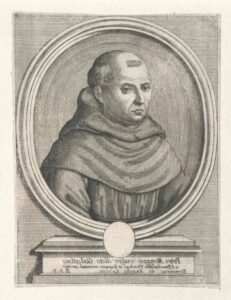
It would not be useless for me to repeat what Galatino wrote about this name, drawing upon Rabbi Moses Egyptus and Al-Ghazali.[18] 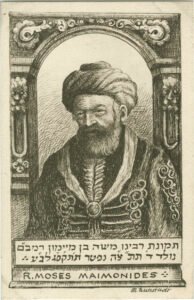 He says:
What Rabbi Moses Maimonides, the son [of Maymun] says about this name in the book which the Jews call Moreh ha-Nevukhim[19] must be noted, for he says there the following, among other things:
“The name שדי is composed of the verb די, which is to suffice and the letter called ש. Moreover, the verb די indicates sufficiency, as is clear from what Obadiah [1:5] says: If robbers came to you or if thieves entered by name, how would you be silent? Would they not have stolen until they had enough (דים)? Again, the letter ש, which is put here at the beginning of the name שדי is the same thing as אשר (that is, who). For that reason, שדי is the same thing as אשר די, that is, He who suffices or He who is sufficient.” (The Guide to the Perplexed, pt. 1, ch. 64 [that is, ch. 63]).[20]
Among the Hebrews, therefore, we find this name to be spoken only of God. Nor indeed is this surprising, since (as was said) its meaning is He who suffices or He who is sufficient or He who is sufficience, which clearly is only appropriate for God. For, as the philosopher Al-Ghazali says in the book entitled On the Divine Names:
“In a simple and absolute sense, God alone is rich and enriching. For neither in substance nor in qualities does He depend on anything else. Rather, He is altogether free from any dependence upon everything that has to do with Him.”
Then Al-Ghazali adds:
“He, therefore, is absolutely and truly rich and sufficient in himself who requires nothing from anyone. And thus, this is the case for God alone. For all others, however, this is said figuratively or in a certain sense.”[21]
Since, therefore, only the God who is three and one is self-sufficient, the name שדי [Shaddai] rightly conveys and indicates the sufficiency or the divine Trinity whereby God is self-sufficient (The Secrets of Catholic Truth, bk. 2, ch. 17 [that is, ch. 16]).[22]
 Then Al-Ghazali adds: