
Accordingly, some interpret it like this: As regards the word and letters, the name Jehovah was not utterly unknown to the fathers, as the passages alleged from Genesis imply. However, He did not reveal the mystery of the name to the patriarchs but only to Moses and, through Moses, to God’s people. And this is what God intends to indicate when He says in Exodus 6 that the patriarchs did not know Him by the name Jehovah. But if you want to know what the mystery of the name Jehovah is, they say that it is the mystery of the future incarnation of the Son of God and of eternal redemption through Him from slavery to sin, Satan, and death. This future redemption was signified and, as it were, gestured at by way of the redemption of the people from Egyptian slavery. For He who spoke to Moses and He who first
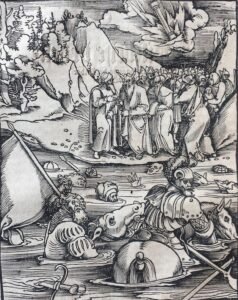 called Himself Ehyeh[1] [I will be] and then יהוה was the Son of God, whom Moses at the same time also called the angel of Jehovah. That is their position.
I embrace that last point with both hands and feet, namely, that He who appeared to Moses and called Himself Jehovah God, the Father of Abraham was Christ, the Son of God. What is more, who can deny what they say about the mystery, namely, that the Son of God declared to Moses the future mystery of spiritual and eternal redemption and that He would be the one who would save all His people (that is, all of the elect) from their sins? He did this first in words and then in deed, by the sign of the fleshly redemption of the people from Egypt.
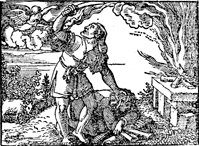 But as regards their assertion that Exodus 6 was the first time that God spoke about this matter, I cannot agree. As if the patriarchs before Moses were ignorant of the mystery of future redemption to be accomplished by the Son of God, the Angel of Jehovah, and Jehovah! Christ said: Abraham rejoiced to see My day. He saw it and was glad [John 8:56]. In short, all the patriarchs before Moses knew what Moses also knew with regard to this great mystery of piety, that Jehovah God—namely, the Son of God, who is also called the Angel of Jehovah—was to be manifested in the flesh, preached among the nations, that He would save His people and draw them up into His glory.
But those who are the authors of this fourth opinion may mean that this mystery was indeed known even by the patriarchs—for they are neither so wicked nor so ignorant to be able or willing to deny this—and that it was known by them through revelation and public preaching in the church. If so, we freely grant that the patriarchs did not know all of this in so plain a manner as did Moses, who knew it through a visible sign, the external and visible redemption of God’s people from Egyptian captivity. For, it is certain that, unlike Moses through whom the people were liberated, they did not see this redemption.
But this meaning does not seem to correspond with the subsequent words of the Lord, for the Lord straightforwardly says that the patriarchs did not know Him by the name Jehovah. He therefore straightforwardly denies that they were familiar with what the name Jehovah signified to Moses. The mystery of future redemption through Christ, however, was not altogether unknown to them.
Accordingly, it remains for us, having said farewell to all the other opinions, to follow the ancient and received judgment and interpretation. And this is it: When God told Moses I appeared to the patriarchs as God Almighty (or: Shaddai[2]), but I was not known to them by My name Jehovah, He was hardly speaking of the actual name Jehovah. After all, this would contradict other plain passages in Genesis referenced previously as well as Isaiah [63:16]: You are Jehovah, our Father, our Redeemer, Your name is from everlasting (מעולם שמך), as if to say: This is Your name from eternity or from the creation of the world.
Rather, the meaning is that God wanted to tell Moses: To be sure, I declared Myself to the patriarchs and truly revealed Myself to be all-powerful and sufficient for all things, and I declared and revealed that great riches are Mine, such that I might grant riches to them, and that I have great power to protect, foster, sustain, direct, and preserve them. But they did not know Me by My name “Jehovah.” That is, I did not complete the work that I had promised them, nor did I really declare that I willed to save them. In fact, I promised that I would free My people from Egypt and bring them into the land of Canaan, but they did not actually see this. You, however, will see it. Thus, to you, O Moses, I will actually be Jehovah, He whom I promised the patriarchs that I would be, that is, true to My promise that I made to the patriarchs. And so, the glory of My name in the redemption of My people will be greater than it was in the [making of the] covenant.
This is the true meaning of this passage, and most of the ancients interpreted it in this way as do nearly all of the most learned interpreters of our own age. Naming them is unnecessary, since their books are available. So likewise, among Hebrew interpreters, Rabbi Solomon [ben Isaac, that is, Rashi]. interprets it and prudently observes that God did not say, I did not make My name 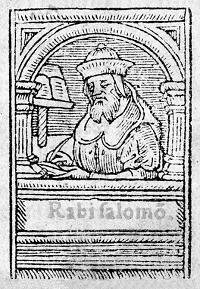 “Jehovah” known to the patriarchs. Rather, He said:
I was not known to them by My name Jehovah, that is, they were not actually familiar with the characteristic feature of My truth on account of which My name is called יהוה, that is, [that I am] true, faithful, and steadfast on account of the truth of My words. For behold, I made a promise to them, but I have not yet fulfilled it.[3]
Thus Rashi.
In summary, in Exodus 6, God is speaking of the knowledge of Jehovah, not knowledge had on the basis of a word and names, but knowledge manifest to all and settled on the basis of public experience. That is to say, the patriarchs knew Him to be God Almighty,[4] but they did not know Him to be Jehovah, the Keeper of promises, namely, the promises concerning the liberation and redemption of His people. Moses, however, would actually see this.
Accordingly, I commend this as the true, authentic, and proper interpretation of this passage. And since that redemption was a type of the future redemption through Christ, a great mystery lies hidden there, knowledge of which affects the hearts of the pious with the greatest of joy. Here it is: Outside of Christ, no one is ignorant of Shaddai,[5] who could, if He wished, save everyone and command the fulfillment of all His promises. But whether He is Jehovah—that is, whether or not He actually wishes to fulfill what He promised and save us—can only be known with any certainty in Christ and in Christ’s redemption.
And moreover, this what the Father said when He put Jesus Christ on display: This is My beloved Son in whom I am well pleased [Matt. 3:17]. And this is what Christ said: This is the will of the Father, that everyone who sees the Son and believes in Him may have eternal life [John 6:40]. And the apostle plainly writes: All His promises are yes and amen in Christ alone [2 Cor. 1:20]. Whence it is reckoned that he who still doubts God’s good will toward him does not yet know God to be Jehovah but only Shaddai.[6] That is to say, he does not know Christ, and he does not believe the redemption accomplished through Christ in which God truly revealed Himself to be Jehovah. Indeed, God can save us even apart from Christ, but He wills to do so only in Christ.
This is why we must hold fast to the notion that, already at the beginning of the world, God assigned the name Jehovah to Himself and revealed it to men. But they did not know experientially how steadfast God Himself is to His promises, as Moses was soon to know. Yes, here God speaks not of theoretical but of practical[7] knowledge. We gather from this that they truly know God to be Jehovah who actually perceive Him to be faithful and steadfast in His promises.