
Five Books on
the Nature of God,
or
On the Divine Attributes
the Nature of God,
or
On the Divine Attributes
By Girolamo Zanchi
Translated by Patrick J. O'Banion
Book 1, Chapter 11, Part 4
Volume 1 is available for order now
from Merchant Royal Press
Lest I be nothing but a reciter of other people’s opinions, I will (as I promised at the start) briefly say something about the meaning, significance, and use of God’s chief names, to the extent that I think will be beneficial ....
Girolamo Zanchi
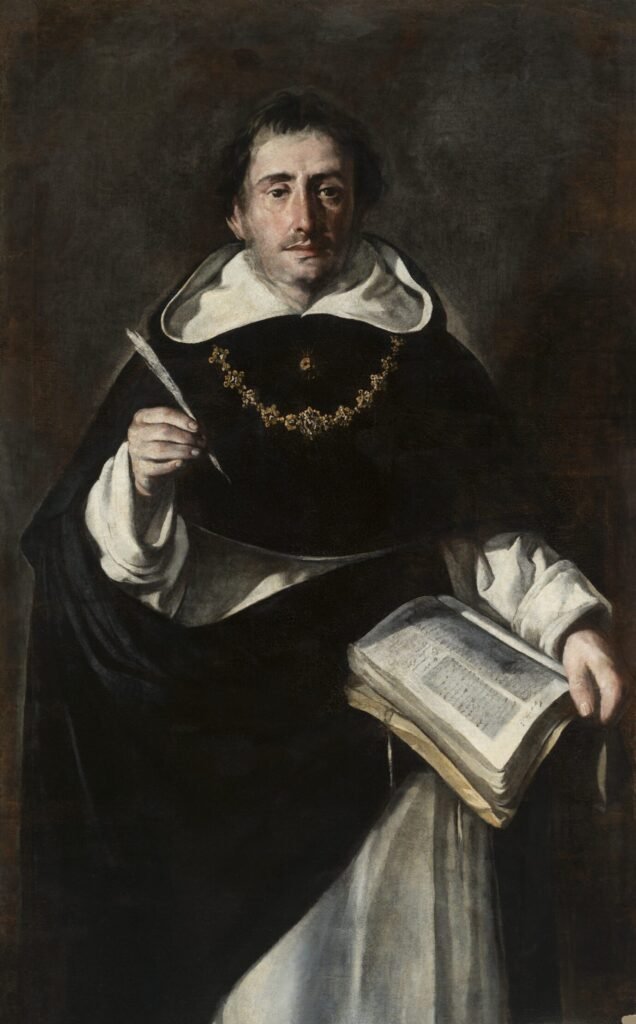
In [Summa theologiae,] I, q. 13, [art. 8,] Thomas Aquinas writes almost the same thing as the Damascene. Principally, he argues that the name the One who is (or ὁ ὤν) is the most proper name of God, just as the Damascene also said that this is the most proper[1] of all God’s other names. Next, Thomas repeats the same etymologies of this name and the Damascene alleged, and he teaches from all of them that God’s providence is implied and demonstrated and, so, that this name is properly suitable for no one but the true God Himself.A certain distinction appears to exist between the Damascene and Thomas. The Damascene says that the name God[2] is the name of His energy.[3] Aquinas maintains, with reference to Ambrose’s opinion (On Faith to Gratian [bk. 1, ch. 1]), that God is a name of nature. But he reconciles the alleged difference between Ambrose’s opinion and the Damascene’s. For whence a certain name is taken is one thing and the meaning of a name assigned is another.
If you consider all three of the Damascene’s etymologies of the name God,[4] which Thomas earlier recounted,[5] then this name is a name of energy.[6] For it is taken from God’s works and actions, which compose His highest providence with regard to all things. But if you consider what the name was intended and assigned to mean, then it is of nature, that is, it was intended and assigned to signify the divine nature and essence. And this is why, properly speaking, this name cannot be shared with anyone outside of God. Thus, Aquinas demonstrates that the opinions of both Ambrose and the Damascene are true, albeit in different respects.[7]In The Mirific Word, Reuchlin wrote very piously and eruditely about the divine names (bk. 2, ch. 14 and following). And moreover, in chapters 15 and 19, he explained the names אהוה [sic] and יהוה in an especially admirable way. What he wrote about the name הוא [hu; “He” or “the One”] is not well founded.Even Master Bullinger of honored memory, pastor of Zurich’s church and a sound theologian, has a brief but learned little treatise about the divine names in his Decades (decade 4, sermon 3).[8] He offers an interpretation of several chief names, and he repeats the same information in that truly excellent and golden book of his, On the Origin of Error (ch. 1).[9]Now, the mentioning of these points, partly from ancient writers and partly from more recent ones, should have satisfied those who can read the authors cited. Nevertheless, lest I be nothing but a reciter of other people’s opinions, I will (as I promised at the start) briefly say something about the meaning, significance, and use of God’s chief names, to the extent that I think will be beneficial, especially because there are some points on which I do not entirely agree with the others.To begin, then, the distinction between divine names mentioned previously should be retained: some were revealed in order to signify God (or to indicate who God is rather than what He is), but other names were established to explain God’s distinctive characteristics [proprietates], that is, what God is like. I do not intend to explain the latter sort of names—certainly not all of them—not only because it would be too much work but also because a good many of them will be explained in the other books in the description of specific attributes. And to report on each of the names of the first part and interpret them accurately is superfluous, since this has already been done by others before me, as I indicated. Hence, I have chosen for myself a few of the principal names of both types and will briefly offer an explanation, focusing initially on the first kind of names and then on the other.As regards the first kind, I will speak first of the name אלוהים [Elohim], for this is the first name that occurs in the Bible, at the very beginning of Genesis. Next, the name Jehovah, for this is the second name, which is set forth by Moses in Genesis 2:4. Third is the name אהיה [Ehyeh] or ὁ ὤν, which we have in Exodus 3:14, and we will open up the true meaning of that passage. Then the name שדי [Shaddai] which is from Genesis 17[:1]. Finally, the names θεοῦ and κυρίου, for these are the principal names, which appear most frequently in the Holy Scriptures and, for that reason, need to have a careful explanation, too. I will pass lightly over the rest and only touch briefly on them.
[1] κυριώτερον. See On the Orthodox Faith, bk. 1, ch. 9. The Russell translation (p. 83) renders this “most important,” however, NPNF2, 9:12b and FOTC, 37:189 take it to mean “most” or “more proper.” This accords better with Zanchi’s point here, which he reiterates in bk. 1, ch. 14 as part of his longer discussion of ὁ ὤν.
[2] θεοῦ.
[3] τῆς ἐνεργείας.
[4] θεοῦ.
[5] Thomas provides the Damascene’s etymologies in ST, I, q. 13, art. 8, obj. 1.
[6] ἐνεργείας.
[7] Thomas writes: “Because therefore God is not known to us in His nature, but is made known to us from His operations or effects, we name Him from these, as said in [ST, I, q. 13,] art. 1; hence this name “God” is a name of operation so far as relates to the source of its meaning. For this name is imposed from His universal providence over all things; since all who speak of God intend to name God as exercising providence over all” (ST, I, q. 13, art. 8, respondeo).
[8] Heinrich Bullinger, The Decades of Henry Bullinger, trans. Thomas Harding, 2 vols. (1849–1852; repr. Reformation Heritage Books, 2004), 2:130–37.
[9] Zanchi claimed in a 1568 letter to Heinrich Bullinger that De origine erroris (1528) came to his attention through the efforts of one Montallinus, a monk whom the Roman Inquisition later condemned to death by burning. Montallinus esteemed the book so highly that he told Zanchi it would be a good bargain to pluck out his right eye in exchange for a copy, since he could then read the book with the left. Fortunately, Zanchi explained to Bullinger, he acquired one “without losing my eyes” (OOT, 3/8:128-29).
This Montallinus is the Franciscan Giovanni Buzio (or Mollio) who was probably born in Montalcino and was condemned to die at Campo dei Fiori in Rome on September 4, 1553. See Bravi, “Da Lucca a Strasburgo,” 42; Baschera and Moser, “Introduction,” 2.
[2] θεοῦ.
[3] τῆς ἐνεργείας.
[4] θεοῦ.
[5] Thomas provides the Damascene’s etymologies in ST, I, q. 13, art. 8, obj. 1.
[6] ἐνεργείας.
[7] Thomas writes: “Because therefore God is not known to us in His nature, but is made known to us from His operations or effects, we name Him from these, as said in [ST, I, q. 13,] art. 1; hence this name “God” is a name of operation so far as relates to the source of its meaning. For this name is imposed from His universal providence over all things; since all who speak of God intend to name God as exercising providence over all” (ST, I, q. 13, art. 8, respondeo).
[8] Heinrich Bullinger, The Decades of Henry Bullinger, trans. Thomas Harding, 2 vols. (1849–1852; repr. Reformation Heritage Books, 2004), 2:130–37.
[9] Zanchi claimed in a 1568 letter to Heinrich Bullinger that De origine erroris (1528) came to his attention through the efforts of one Montallinus, a monk whom the Roman Inquisition later condemned to death by burning. Montallinus esteemed the book so highly that he told Zanchi it would be a good bargain to pluck out his right eye in exchange for a copy, since he could then read the book with the left. Fortunately, Zanchi explained to Bullinger, he acquired one “without losing my eyes” (OOT, 3/8:128-29).
This Montallinus is the Franciscan Giovanni Buzio (or Mollio) who was probably born in Montalcino and was condemned to die at Campo dei Fiori in Rome on September 4, 1553. See Bravi, “Da Lucca a Strasburgo,” 42; Baschera and Moser, “Introduction,” 2.