
The names Creator, Redeemer, Savior, which signify a relation, befell God in time and began, in time, to be said about God. Yet, at the same time, nothing new happened to Him, as if there are accidents in Him or as if a change took place in God. Rather, the change happened only in us.
Girolamo Zanchi
Five Books on the Nature of God,
or
On the Divine Attributes
or
On the Divine Attributes
By Girolamo Zanchi
Translated by Patrick J. O'Banion
Book 1, Chapter 10, Quaestio 9, Part 2
Volume 1 is available for order now
from Merchant Royal Press
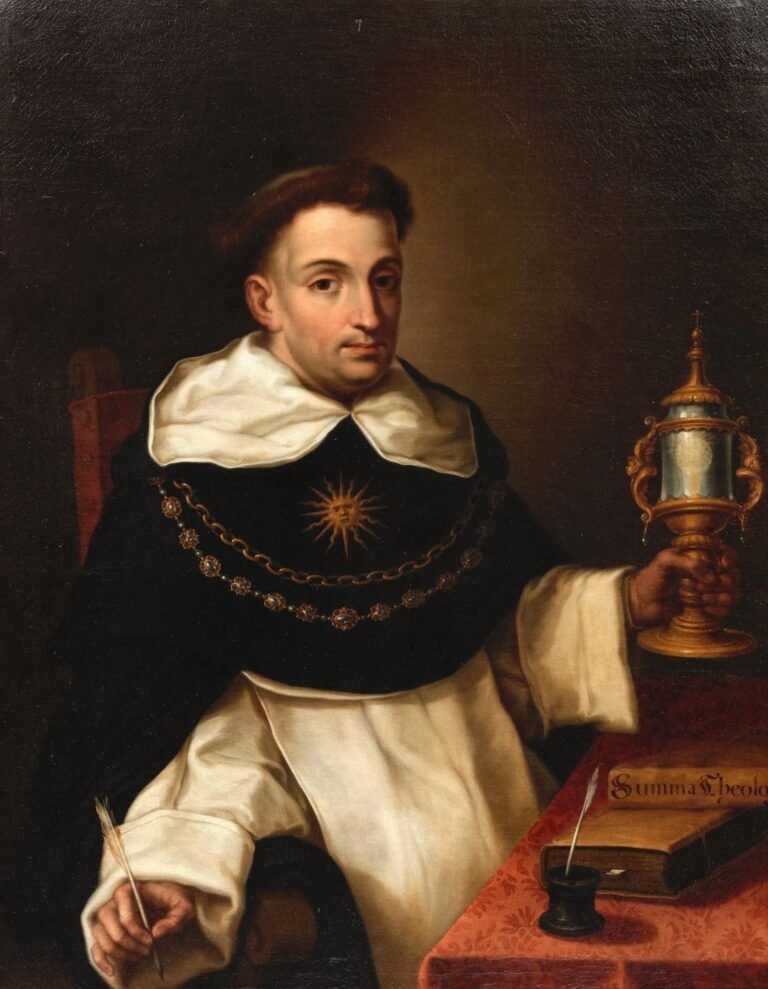
Even so, for me to repeat what Thomas Aquinas wrote would not be useless. Accordingly, the summary of Thomas’s explanation is this: God is not part of the creaturely order but outside of the entire order of created nature. Hence, God is referred to no creature, but all creatures are referred to Him and also are ordered unto Him as unto their cause. It follows from this that creatures have a real relation to God, but God has only a rational (rather than a real) relation to creatures.[1]
In what sense is it merely rational? It is merely rational insofar as God Himself always remains the same and always exists outside of the creaturely order. He is referred to them in no other way than insofar as the creatures themselves are referred to Him. A relation exists between this column and me, since it is to the right of me and on my right. Where is this relation? Obviously, there is no real relation in the column, for the column per se is without a left or a right. Rather, it is on the right if I turn my right side toward it. It will be on the left if I turn my left side toward it.
Two things are evident from this: First, the column per se has neither a right side nor a left side, and so it has no real relation. But it is made to the right or left of me as I turn myself toward it, either to the right or to the left. And thus, the relation in me toward it is real, but the relation in the column toward me is termed only a rational relation. Second, this makes evident that a change occurs only in me, and not in the column, on account of this relation. Therefore, although temporally this column may come to be now on my right and now on my left, and thus one may say that right or left will be predicated of the column at various times, yet at no time does any noticeable change occur in it.
Hence, we are shown by clear analogies and reasons how we must speak about God and those names of God which signify a relation between Him and us. For in fact, when God created the world (or when He redeemed it from sin and saved it), a relationship between Him and creatures began that was of such a kind as arises between one who acts and that which is acted upon. And thus, the names Creator, Redeemer, Savior, which signify a relation, befell God in time and began, in time, to be said about God. Yet, at the same time, nothing new happened to Him, as if there are accidents in Him or as if a change took place in God. Rather, the change happened only in us. Indeed, created things were called (as it were) and transformed from nothing into something. Men are said to have been redeemed and saved when they were transferred from evil to good and from the kingdom of Satan into the kingdom of His beloved Son [Col. 1:13]. When we sin, God becomes angry with us; when we repent, He is appeased, without any change having occurred in Him but always in us.
In short, Thomas’s explanation is actually the same as Augustine’s was, but the one explained the matter oratorically and more clearly while the other did so scholastically and, thus, not so plainly to all.