
The Origin of the Name יהוה
Accordingly, I come to the sixth point. Various opinions also exist about the institution or initial origin of this name, and I will explain which of them is true with a few words. In fact, five different opinions exist.
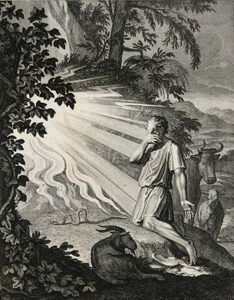 First, some think that this name was first revealed to men by God and that He imposed it upon Himself only when He appeared to Moses in Exodus 3:14 and, being asked what His name was, responded אהיה אשר אהיה [Ehyeh asher Ehyeh]. Then, a little later, repeating (as it were) the same verb (יהיה; He will be) in the third person, He said: Thus you will say to the children of Israel: “יהיה, the God of your fathers, sent me unto you, and this is My name.” Therefore, [those who hold this opinion argue that,] just as the name I am[1] was first revealed at that time, so also was the name יהוה, which is nothing more than the third person singular future of the same verb: היה [to be].
And they support this opinion with reference to Exodus 6:3, since the Lord plainly says the following: I appeared to the patriarchs as Shaddai,[2] but I was not known to them by the name יהוה. Hence, this name appears to have been unknown to the patriarchs and, hence, was first revealed at that time and to Moses. But [this cannot be] because the name is found to have been used more than once in the book of Genesis, for example in 2:4. Likewise, in 4[:1], when Eve gave birth to Cain, she said: I have gotten a man through יהוה. Those who hold this view respond that Moses wrote these things after the name יהוה had been revealed to him, and he made use of this name of God at his own discretion in writing this history.[3] But he did not mean to indicate thereby that the name was first known at that time [in Genesis] by Eve or other patriarchs. This is the first opinion.
As I see it, however, they are mistaken. In fact, a great number of passages in Genesis are plainly so contrary to this that they cannot be dodged without them indicating that this name had already been revealed to the patriarchs from the creation of the world and that God named Himself by this name even before Moses. For what they say is that Moses, when he wrote the story of the book of Genesis, made use of the name Jehovah, not because it was known to the patriarchs at that time but because, at the time of writing, Moses himself knew that this was God’s proper name. Something like this might possibly have occurred in situations where Moses himself was speaking about God at his own discretion. For example, when he says: These are the generations of heaven and earth, when they were created on the day on which Jehovah made heaven and earth (Gen. 2[:4]). But when Moses refers to the words of others—whether of men or of God Himself—who spoke such and such, it is actually unlikely [veresimile non est] and cannot be granted that Moses reported words other than those that they used. For then he would have acted contrary to the duty of a true and faithful historian.
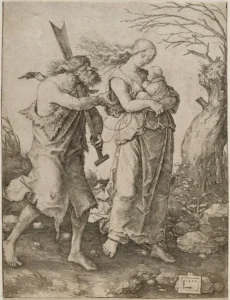 Take for example what he reports about Eve in Genesis 4. After giving birth to Cain, she said: I have gotten a man through Jehovah. She must either have used the word Jehovah or some other name of God. If she used the name Jehovah, then she knew it. If she used some other name of God, such as I have gotten through Elohim, then Moses, who failed to faithfully report that word and the name that Eve used, acted wrongly and wickedly. But far be it from us to say or think such a thing of Moses. For if we grant it, then we do away with confidence in the entire history of Genesis. And someone will be able to deny that, when Moses records Adam calling his wife woman[4] [in Gen. 2:23], he really called her by this name. Instead, they will claim that Moses substituted the name that Adam used for another.
Next, if Eve used another of God’s names—for example, Elohim—why did Moses set it aside and substitute it with the name Jehovah? But of greater significance are those times when God speaks to the patriarchs and calls Himself Jehovah, such as when Moses says in Genesis 15:7 that God appeared to Abraham and tells him: I am Jehovah, who led you out of Ur of the Chaldees. Likewise, in Genesis 28:13, He said the same thing to Jacob: I am Jehovah your God. In those and in similar passages, if God did not use the name יהוה, what sort of impudence was it for Moses to say that God had said such and such despite the fact that He actually said something else? These prove that, long before Moses, God revealed Himself to the patriarchs by His name יהוה.
Furthermore, some think that this name was known before Moses by some of the fathers but that it was not known everywhere to everyone in God’s churches. They think, however, that it was revealed to all the children of Israel after Moses, for God said to Moses: Say to the children of Israel, Jehovah sent me unto you. And they contend that the passage in Exodus 6 should be understood in this way: I was not known to you by the name “Jehovah,” that is to say, everywhere and by all. This is how they want to reconcile the Scriptures.
But this opinion is not secure either. For some passages in Genesis teach that the name Jehovah was known everywhere in God’s church, such as when we read in Genesis 4[:26] and elsewhere that the name of Jehovah was called upon at that time. Nor has it escaped my notice that the words called upon in this passage signify the whole worship of God and that the passage means that, at this time, Seth restored the true worship of the true God, which had nearly ceased. Nevertheless, since calling upon is itself the chief part of divine worship, it cannot be denied that Moses is first and foremost talking about actually calling upon God. Moreover, since Moses plainly says that the name Jehovah was called upon, he is not saying merely that Jehovah was called upon but that the name Jehovah itself was called upon.
In my judgement at least, that passage cannot be better understood than if we say that the faithful in the church everywhere called upon the true God Himself by His proper name, which is יהוה. I do not condemn those who translate and understand it differently, but I am fond of the ancient catholic [interpretation], when I am not compelled to disagree.[5] Accordingly, if the question is about the actual name, nothing else can be taught on the basis of the Holy Writings than that the name Jehovah was known and honored and called upon in the church of God, even from the beginning of the world.
Now, as regards the passage in Exodus 6 from which this opinion is wrongly derived, it implies nothing like what they attempt to prove from it. For, properly speaking, God is not talking there about the name insofar as it consists of four letters but of the actual revelation of the reality that is signified by this name, namely, God’s 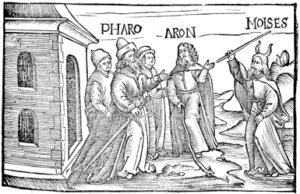 steadfastness in His promise to liberate His people from Egypt and to lead them into the land of Canaan. This is what we began to articulate previously and will as yet more fully state.
Furthermore, others have written that the actual name Jehovah was known to the patriarchs and in God’s church but that they were unfamiliar with its power. But what exactly is that power? They say it is that whereby man, as God’s co-laborer, may perform miracles through the invocation of this name. The patriarchs were ignorant of the power of this name, meaning, its power to perform miracles and wonders. This is why we read nothing about miracles being performed before Moses; those who preceded him were ignorant of the name’s power. Those who hold this opinion say that the power of this name was instead first revealed to Moses in Exodus 6. Therefore, before anyone else, he began to perform miracles and great wonders by the power of the name Jehovah. And thus, they argue, God’s words [in Exodus 6] should not be understood with reference to the name but to the power of the name whereby miracles occur.[6]
In fact, however, this interpretation is actually Jewish and Rabbinic. That is, it is foolish, wicked, and full of superstition, as if the power of performing miracles were contained in this name. And they imagine that merely by disclosing to Moses the power of performing miracles contained in this name, God was revealing something of great importance to him for the first time.