
The name Elohim chiefly indicates the multiple persons in Jehovah God. And this is the proper meaning and force of this name.
Girolamo Zanchi
Five Books on
the Nature of God,
or
On the Divine Attributes
the Nature of God,
or
On the Divine Attributes
By Girolamo Zanchi
Translated by Patrick J. O'Banion
Book 1, Chapter 12, Part 2
Volume 1 is available for order now
from Merchant Royal Press
We should note that the Holy Scriptures use only three modes to construe the name Elohim grammatically when it signifies multiple persons.
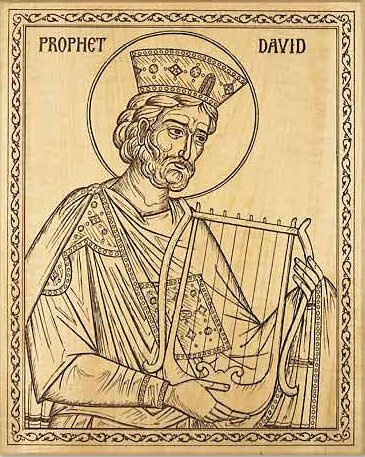
First, this name is sometimes construed in the plural number with a verb that is also plural. In that case, it is certainly undeniable that multiple persons in God are indicated, for a plural verb is not customarily assigned to a single person. I allege the example of 2 Samuel 7:13 [that is, v. 23], where David speaks to God in the following way: Who is like Your people, like Israel, the one nation on earth (an elect nation) whom Elohim went לפרות לו (to redeem for Himself)? It is certain that David is speaking of Jehovah, who had elected for Himself the Israelite people. But David calls this Jehovah Elohim, with the subject as well as the verb (went; הלכו) in the plural number. Thus, David acknowledged plural Elohim in Jehovah. Nevertheless, he also adds לו (for Himself): לפרות לו [to redeem for Himself]. Therefore, David knew that these many Elohim were one Jehovah. I could adduce an infinite number of additional examples, but this one should suffice.
The second mode is when this name is conjugated in the plural with an adjective that is also in the plural but with the verb in the singular. In that case, it cannot be said to indicate anything other than plural Elohim, for it is not customary in the Scriptures for a plural adjective to be attributed to one person, as when someone is called holy and wise [in the plural]. For example, Joshua 24:19: You are not able to serve Jehovah, for Elohim קדושים הוא [He is holies]. Nevertheless, since Joshua adds the singular pronoun הוא [He] to the plural adjective קדושים [holies], he is clearly showing that these plural Elohim are the one Jehovah.
The third mode is when the plural noun Elohim is construed with a singular verb, such as is or does or something similar. An example is in Genesis 1[:1 and 3]: Elohim created, and Elohim said [with both verbs in the singular]. The plurality of persons is not so obviously clear in this case as in the previous modes and examples. But even so, first of all, on the basis of the singular number of the verb—created, made, said [all in the singular]—we uncontroversially conclude that there is one Creator of things. Second, based on the circumstances of the passages themselves as well as a comparison with other testimonies concerning the same thing, we easily adduce that the name Elohim signifies multiple persons, as we saw previously in the example of Genesis 1[:1]: Elohim created heaven. For we know well that all things were created through the Son [Col. 1:16]. Again: And Elohim said, “Let Us make man” [Gen. 1:26].
To summarize: The name Elohim chiefly indicates the multiple persons in Jehovah God. And this is the proper meaning and force of this name. These are the things that I had in mind to say about the name Elohim for the sake of a true understanding of the Scriptures. Now, a great deal more must be said about the name Jehovah.