
"Sabaoth" signifies God’s omnipotence or what sort of God He is, namely, one who uses all things like an army to accomplish what He wills.
Girolamo Zanchi
Five Books on
the Nature of God,
or
On the Divine Attributes
the Nature of God,
or
On the Divine Attributes
By Girolamo Zanchi
Translated by Patrick J. O'Banion
Book 1, Chapter 11, Part 2
Volume 1 is available for order now
from Merchant Royal Press
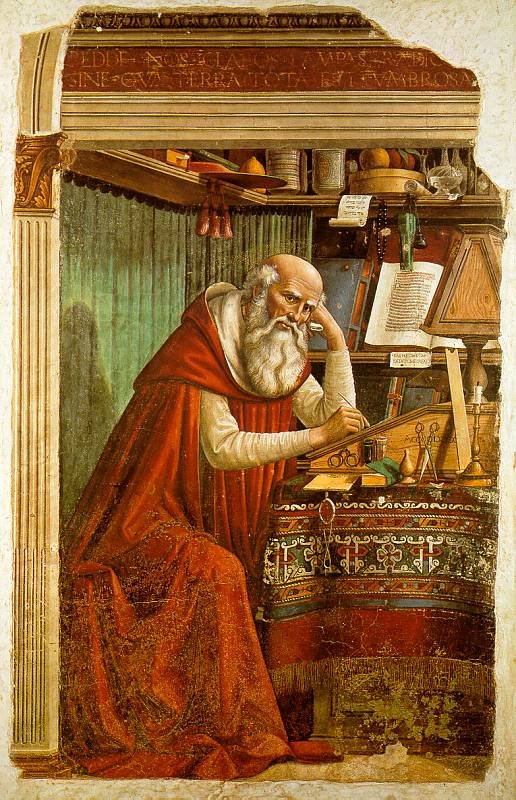
In Jerome’s letter to Marcella, which concerns the divine names, we read that she asked St. Jerome to collect and send to her all the names of God that are found in the Old Testament Scriptures along with their interpretations (tome 3, p. 95 [that is, letter 25]). Jerome, therefore, gathered up ten names and interpreted each one. If these are not all the names, they certainly are the chief ones. Accordingly, I will faithfully repeat Jerome’s comments, since they are brief. Moreover, Jerome’s authority in these matters is great, for in his day he was the most learned Hebraist in the entire church.
The first name of God is אל [El], which the Septuagint translates as θεὸν, that is, God. Aquila [of Sinope], expressing its etymology,[1] interprets it as ἰσχυρὸν, that is, strong.[2] Next, אלהים [Elohim] is the second name and אלהי [Elohe] is third, both of which are God. The fourth is צבאות [Sabaoth], which in the Septuagint is of hosts, and of armies in Aquila. Fifth,אליון [Elyon], for which we say exalted. The sixth is אשר אהיה [asher Ehyeh], which is read in Exodus [3:14]: He who is sent me. The seventh is אדני [Adonai], which we usually name Lord. Eighth is יה [Yah], which is only used for God, and which we hear in the final syllable of Hallelujah. The ninth name is the tetragrammaton,[3] which they considered ἀνεκφώνητον (that is, ineffable) and which is written with those four letters: י ה ו ה. Some, misunderstanding these letters, were in the habit of reading them as pipi on account of their similarity with the Greek letters πιπι. The tenth, which was mentioned above, is שדי [Shaddai] and is found interpreted in Ezekiel [1:24 and 10:5].Moreover, at the beginning of the letter, Jerome said the following about the name Shaddai: I had said that, among the Hebrews, Shaddai[4] has been rendered as “God of heaven.” Aquila understands it to mean ἄλκιμον, which we can take to mean “strong” and “capable of doing everything.”[5]These are Jerome’s words, but I marvel that he includes the name Sabaoth[6] among God’s names, since God is never called Sabaoth simply. Rather, that word is always joined with some name of God, such as Jehovah Sabaoth or Elohe Sabaoth, for it is not a name of God. Rather, it signifies God’s omnipotence or what sort of God He is, namely, one who uses all things like an army to accomplish what He wills. I have said what Jerome wrote concerning the divine names.
[2] Aquila of Sinope (2nd c. AD) produced a Greek translation of the Old Testament.
[3] τετραγράμματον.
[4] שדי.
[5] Jerome, Sancti Eusebii Hieronymi Epistulae, Pars I: Epistulae I–LXX, ed. Isidorus Hilberg, Corpus Scriptorum Ecclesiasticorum Latinorum 54 (Österreichische Akademie der Wissenschaften Wien, 1996), 218–20.
[6] צבאות.