If the things that Galatino records are true, they certainly are not lacking in mystery, and it is clearly intimated that the ancient Jews were not ignorant of the mystery of the Trinity.

Five Books on the Nature of God,
or
On the Divine Attributes


By Girolamo Zanchi

Translated by Patrick J. O'Banion

Book 1, Chapter 11, Part 1

Volume 1 is available for order now
from Merchant Royal Press

Chapter Eleven

Various opinions are explained regarding the true meaning and use of God’s principal names.

So far, we have completed ten chapters on the divine names. Now, an eleventh follows which is about the meaning and use of God’s principal names.

To explain how many names the Scriptures, in both the Old and the New Testament, use to describe God and what all of them are, would be tedious and tiresome not to mention of little use. Accordingly, it will suffice to set forth the principal ones and briefly explain their meaning, significance, and use.

Many people have written many things about the divine names. Dionysius the Areopagite has already been mentioned. Rabbi Moses Egyptus [that is, Moses Maimonides] explains several names received from the Scriptures ([The Guide to the Perplexed,] bk. 1, ch. 60 [that is, ch. 61 in modern editions]). To be sure, he writes a great deal about the name יהוה and says, among other things, that all the names of God are derived from His works, except the name Jehovah. Dionysius, the Damascene, Aquinas, and others later wrote the following: All God’s names are taken from creatures, with the possible exception (says Thomas) of the tetragrammaton, which they think is deduced from God’s essence.[1]
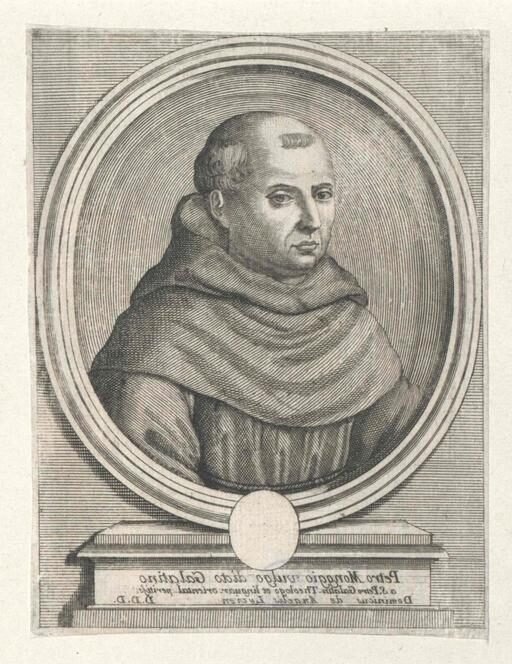
Notwithstanding, the actual derivation of that name has already been mentioned and will be mentioned again. In chapter 61, Moses [Maimonides] discusses the name that, among the Hebrews, is called the name of twelve letters and that Galatino[1] later explained in a thorough fashion. But in chapter 62 [that is, chapter 63 in modern editions], Maimonides offers an explanation of the name that is contained in Exodus 3: אהיה אשר אהיה [Ehyeh asher Ehyeh],[2] which others translate I am who I am. Finally, in chapter 63, he writes about the name אדני [Adonai; “Lord”] and the name כבוד [kavod; “glory”], which also signifies God or deity.[3]

Beginning in the ninth chapter of the second book and continuing to the end of that book, Galatino discusses many divine names, partly on the basis of the Scriptures and partly from Moses Egyptus and other rabbis, and he attempts to derive from all of them the unity of the divine essence and trinity of persons. In chapter 9, he writes quite a bit about the name Elohim and, on the basis of many passages of Holy Scripture that mention this name, deduces the plurality of divine persons in one essence.

And among the testimonies which Galatino cites is that well-known passage from Joshua 24[:19], where Joshua said to the Israelites: לא תוכלו לעבד את יהוה כי אלהים קדשים הוא. That is: You will not be able to serve Jehovah because He Himself [is] holy Gods.[1] In the same section, he refutes the objections and interpretations of more recent Jews against arguments from such passages for the plurality of persons and unity of essence. Likewise, in chapters 10 and 11,[2] Galatino writes a great deal about the name Jehovah based on the Talmud and Kabbalists, and he contends that the unity of the divine essence and the plurality of the persons is vindicated by this name.

Additionally, Galatino says that the reason why the Hebrews wrote that the name יהוה cannot be expressed is not because this word cannot be pronounced but in order to indicate that God, who is triplex and single and whose essence is indicated by this name, is ineffable and incomprehensible. And what others have written pertains to this point, that God does not have a name of which we can have knowledge. And this is precisely what [Hermes] Trismegistus meant when he said: For the being is nameless,[3] and likewise when he wrote: Whose name (namely, God’s) cannot be spoken by the mouth of men.[4]

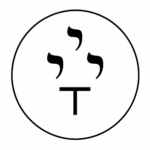
I do not dislike what Galatino penned about how the Chaldeans wrote the name Jehovah, namely, that it was written with three yod and with a qamets added below them, all enclosed by a single circle thus. And this way of writing the name יהוה indicated the three hypostases[1] in one essence.[2]

In chapter 11, drawing upon Rabbi Moses [Maimonides], Galatino discusses what the Hebrews call the twelve-letter name, which I previously mentioned. In fact, it was not one name consisting of twelve letters but three names which, when joined together, totaled twelve letters, and the one God was signified by these three names. And thus, it was called the twelve-letter name by the unusual number. Those three names, however, are brought together into one—the name of the Father, the name of the Son, and the name of the Holy Spirit.

The matter itself is better discerned in Hebrew, for the Father is called אב [ab; “Father”], and thus we have two letters. The Son is called בן [ben; “Son”], and so you have four. Then, with regard to the Holy Spirit, they add ורוח הקדש [vruach ha qadosh], that is, and the Holy Spirit. And altogether this has eight letters, which, added to the previous four, amounts to twelve letters. If the things that Galatino records are true, they certainly are not lacking in mystery, and it is clearly intimated that the ancient Jews were not ignorant of the mystery of the Trinity.

But what Galatino subsequently wrote in chapter 12 about the twenty-four-letter name, which, he records, the ancient Hebrews used to signify that same Jehovah, is both too lengthy and too obscure for me to be able to explain briefly. I say the same with regard to the things he discusses in chapter 18 concerning the seventy-two-letter name. I will certainly not review here what he discusses in chapter 13 about the name אדני [Adonai; “Lord”], in chapter 14 about the name אהיה [Ehyeh; “I am”], and in chapter 16 about שהדי [Shahadai (sic); “almighty”] lest I be compelled to repeat the same things later and, so, discourse upon points I have already addressed. As far as these and the other names of God regarded as the primary ones in the Old Testament go, I will say at the end which of them I judge to be useful.

In chapter 15, however, that same Galatino also places among the names of God the name אגלא [Agla], which is not found in the Bible. As for the word itself, it was doubtless used only among the Hebrews. Because it is brief and pious, the meaning of this name, should not be neglected. Accordingly, he says that the four letters א ג ל א whereby this divine name אגלא [Agla] is composed signifies four words, which beautifully expresses the omnipotence of the divine Trinity. He says:

For the first letter, א [aleph], is put down for אתה [attah; You], and the letter ג [ghimel] for גבור [ghibbor], meaning powerful and mighty. Moreover, the letter ל [lamed] is put down for לעולם [l’olam], meaning forever. Finally, א [aleph] is put down at the end for אדני [Adonai], meaning Lord. Hence, all together they produce: You, O Lord, are forever mighty.[1]

I have summarized these things in brief out of Galatino.

[1] ST, I, q. 13, art. 11 (Reply to Obj. 1).
[2] That is, the Pietro Collona Galatino (c. 1464–c. 1540), who was a Kabbalist and Hebraist at the papal court.
[3] In the Heidelberg, 1577, 1590, and 1598 editions, this is given as אהיה אהיה אשר, presumably a printer error. It has been corrected to reflect the order in the biblical text.
[4] In fact, Adonai is primarily discussed in ch. 61 and kavod in ch. 64 of The Guide to the Perplexed.
[5] This is a challenging section for a variety of reasons. First, the order of the Hebrew words printed in the 1577, 1590, and 1598 editions is very confused. I have provided what seems to be the intended order, corresponding with Josh. 24:19a.
Second, without stating the point explicitly, Zanchi is drawing attention to the fact that the formally plural noun Elohim is accompanied by the (likewise) plural adjective “holy” (qedoshim), and he is agreeing with Galatino in translating this as “holy Gods” (Dij sancti).
Third, Zanchi leaves unmentioned the fact that Galatino, in the referenced section of his work, is recounting a story about Rabbi Simlai (3rd c. AD) in which a group of heretics asks how many gods created the world. Simlai responded that they must seek an answer to that question in the law. To this, the heretics responded by quoting, among other verses, Josh. 24:19, noting that it says “holy Gods.” Simlai responds, “Read the end of the text. For it does not say ‘because They [are] holy Gods’ but rather ‘He is holy Gods.” The point of the exchange is to emphasize that while the text indicates plurality of a sort in God, it does not teach polytheism. Pietro Colonna Galatino, Opus de arcanis catholicae veritatis: hoc est, in omnia difficilia loca Veteris Testamenti, ex Talmud, alijsque … libris, … commentarius (Basil, 1561), 50.
Fourth and finally, as the story about Rabbi Simlai suggests, when Zanchi and Galatino translate Elohim as “Gods,” they are not endorsing polytheism but pointing to the fact that the name Elohim properly indicates the plurality of persons in God. This is an argument that Zanchi develops at length in his De tribus Elohim. In fact, he begins that work by asserting, “The true God Jehovah, is only one, and this God is three אלהים, truly distinguished from one another” (pt. 1, bk. 1). On this topic, see Merkle, Defending the Trinity, 88–117.
[6] In the 1550, 1561, and 1603 editions of De arcanis, two chapters are labeled “chapter 10,” which are then followed by a “chapter 11.” This chapter 11 does not address the tetragrammaton. The tetragrammaton is, however, addressed in both of the chapter 10s.
Note that in what follows, Zanchi repeatedly references the wrong chapter numbers in Galatino’s work. The correct chapters have been inserted in their place without further editorial comment.
[7] ἔστι γὰρ ὁ ὤν ἀνώνυμος. This fragment of the Hermetica, attributed to the legendary figure Hermes Trismegistus, was preserved and handed down through Lactantius’s Divine Institutes, bk. 1, ch. 6 (FOTC, 49:32).
[8] οὗ τὸ ὄνομα οὐ δύναται ἀνθρωπίνῳ στόματι λαληθῆναι. Another fragment of the Hermetica transmitted through Lactantius, Divine Institutes, bk. 4, ch. 7 (FOTC, 49:257).
[9] ὑποστάσεις.
[10] Galatino, De arcanis, 57 (bk. 2, ch. 10b).
[11] Galatino, De arcanis, 67. As the next sentence indicates, this is less a direct quotation than a summary of Galatino’s words.The acronym אגלא (agla) is derived from the opening words of the Jewish blessing Gevurot, recited daily as part of the Amidah. The association of אגלא with that part of the Gevurot is so close that, in the written liturgy, the acronym is sometimes used in place of the words. The conjunction of letters took on a magical significance for Kabbalists, and in Christian Europe it was incorporated into inscriptions and amulets during the Middle Ages.

Share :